StellarPix

Gallery

Explore breathtaking astrophotography from the community.

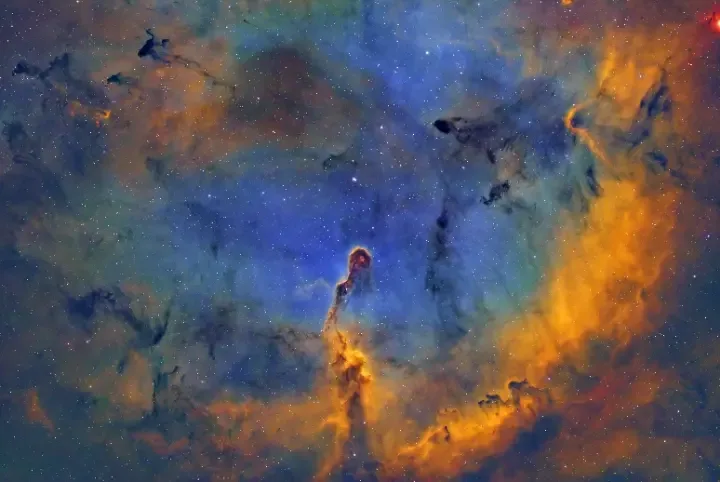
Elephant Trunk Nebula - IC1396

Elephant Trunk Nebula - IC1396

By Michael PageNebula

Telescope: Williams Optics UltraCat 108

Camera: ZWO ASI2600MM

Location: Starfront Observatory, Rockwood,Texas

Captured: 2026-09-06

The Elephant's Trunk Nebula (IC 1396A) is a concentration of interstellar gas and dust within the much larger ionized gas region IC 1396 located in the constellation Cepheus about 2,400 light years away from Earth.[1] The nebula is a dark, dense globule that gets its name from its appearance at visible light wavelengths, where there is a dark patch with a bright, sinuous rim. The bright rim is the surface of the dense cloud that is being illuminated and ionized by a very bright, massive multiple star (HD 206267) that is just to the east of the Elephant's Trunk Nebula . The entire IC 1396 region is ionized by the massive star, except for dense globules that can protect themselves from the star's harsh ultraviolet ray
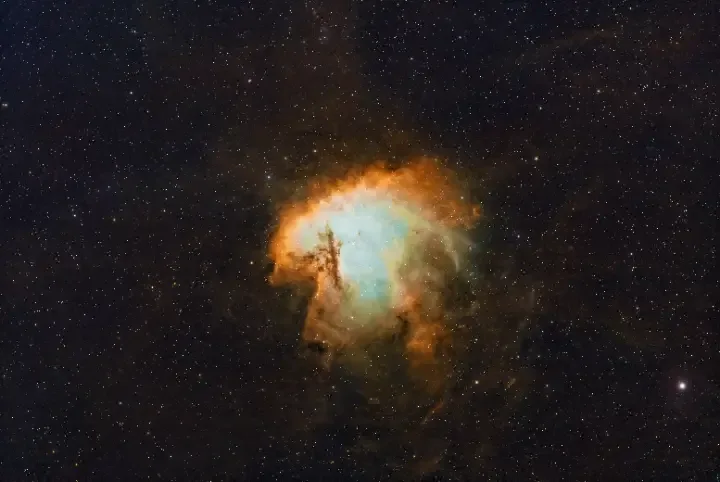
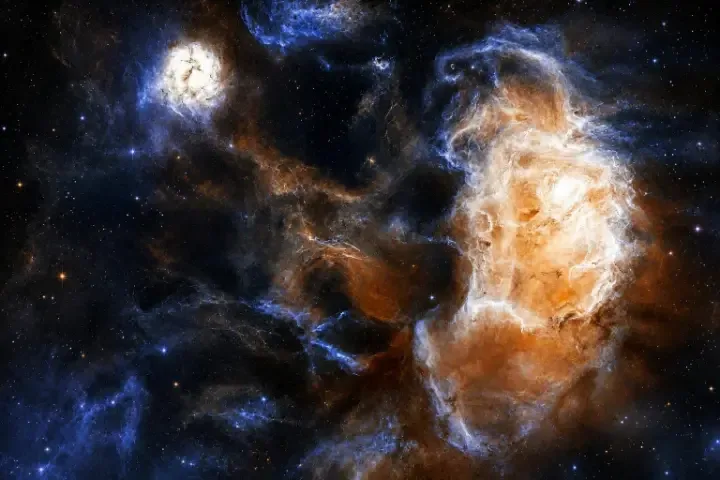
Pacman Nebula - NGC281W

Pacman Nebula - NGC281W

By Michael PageNebula

Telescope: Williams Optics UltraCat 108

Camera: ZWO ASI2600MM

Location: Starfront Observatory

Captured: 2026-08-31

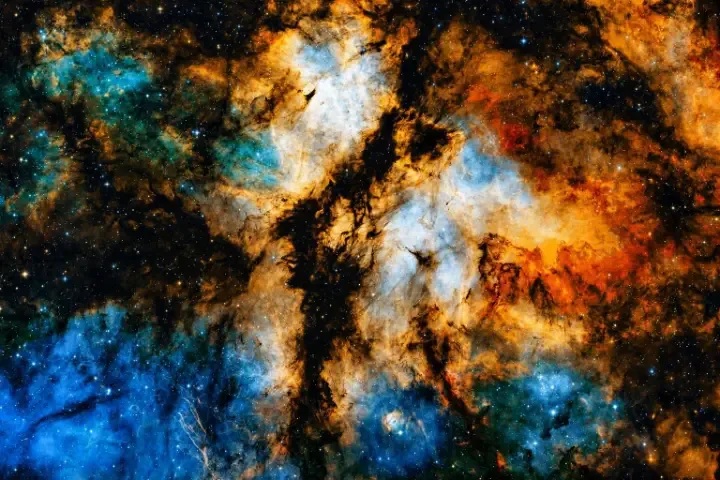
NGC 281, IC 11 or Sh2-184 is a bright emission nebula and part of an H II region in the northern constellation of Cassiopeia and is part of the Milky Way's Perseus Spiral Arm. This 20×30 arcmin sized nebulosity is also associated with open cluster IC 1590, several Bok globules and the multiple star, B 1. It collectively forms Sh2-184,[4] spanning over a larger area of 40 arcmin.[5] A recent distance from radio parallaxes of water masers at 22 GHz made during 2014 is estimated it lies 2.82±0.20 kpc (9200 ly) from us.[6] Colloquially, NGC 281 is also known as the Pacman Nebula for its resemblance to the video game character.[3]

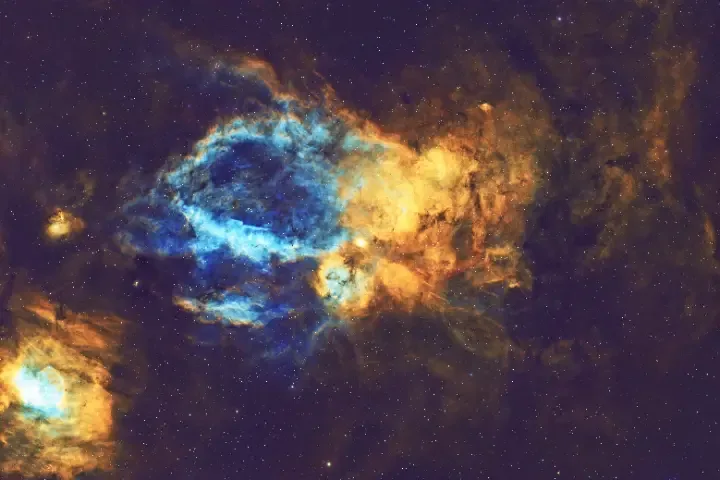
Lobster Claw Nebula - Sh2157

Lobster Claw Nebula - Sh2157

By Michael PageNebula

Telescope: Williams Optics UltraCat 108

Camera: ZWO ASI2600MM

Location: Los Gatos, California, USA.

Captured: 2026-08-29

The Lobster Claw Nebula (Sh2-157) is a large emission nebula located about 11,000 light-years away from Earth in the constellation Cassiopeia

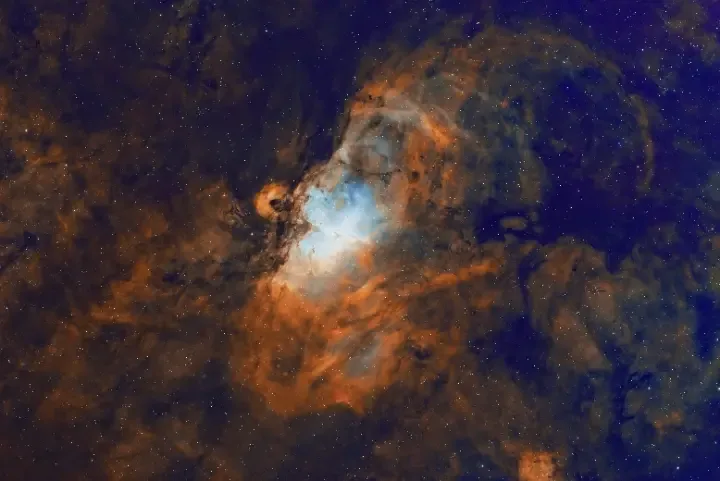
Eagle Nebula - M16

Eagle Nebula - M16

By Michael PageNebula

Telescope: Williams Optics UltraCat 108

Camera: ZWO ASI2600MM

Location: Starfront Observatory

Captured: 2026-08-26

The Eagle Nebula is a young open cluster of stars in the constellation of Serpens. Alternatively, it is catalogued as Messier 16, M16, or NGC 6611, and sometimes referred to as the Star Queen Nebula. This cluster discovered by Jean-Philippe de Cheseaux in 1745–46. Both the "Eagle" and the "Star Queen" refer to visual impressions of the dark silhouette near the center of the nebula,[4][5] an area made famous as the "Pillars of Creation" imaged by the Hubble Space Telescope. The nebula contains several active star-forming gas and dust regions, including the aforementioned Pillars of Creation. The Eagle Nebula lies in the Sagittarius Arm of the Milky Way.

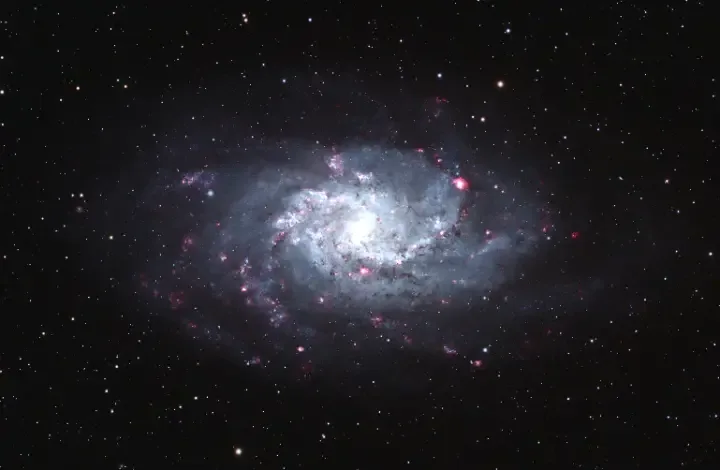
Triangulam Galaxy - M33

Triangulam Galaxy - M33

By Michael PageGalaxy

Telescope: Williams Optics UltraCat 108

Camera: ZWO ASI2600MM

Location: Starfront Observatory, Rockwood,Texas

Captured: 2026-08-20

The Triangulum Galaxy, also known as Messier 33 or NGC 598, is a spiral galaxy located roughly 2.7 to 3 million light-years from Earth in the constellation Triangulum. It is the third-largest member of our Local Group of galaxies, following the Andromeda Galaxy and the Milky Way.

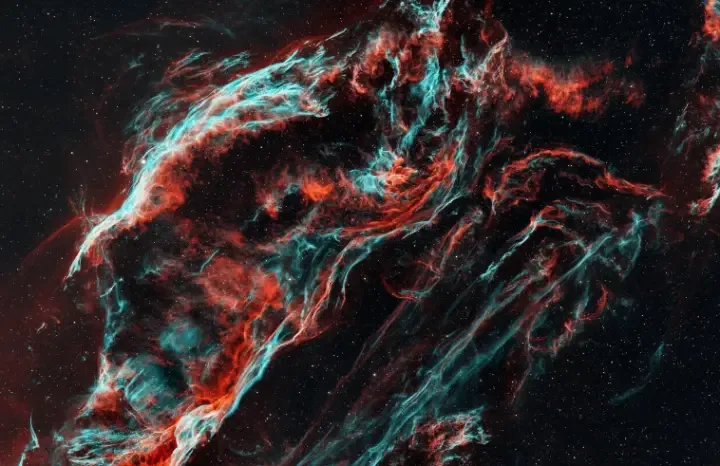
Western Veil Nebula - NGC6960

Western Veil Nebula - NGC6960

By Michael PageNebula

Telescope: Williams Optics UltraCat 108

Camera: ZWO ASI2600MM

Location: Starfront Observatory, Rockwood,Texas

Captured: 2026-08-17

The Veil Nebula is a cloud of heated and ionized gas and dust in the constellation Cygnus.[4] It constitutes the brightest parts of the visible portion of the Cygnus Loop,[5] a supernova remnant, many portions of which have acquired their own individual names and catalogue identifiers. The source supernova was a star 20 times more massive than the Sun which exploded between 10,000 and 20,000 years ago.[2] At the time of the explosion, the supernova would have appeared brighter than Venus in the sky, and visible in the daytime.[6] The remnants have since expanded to cover an area of the sky roughly 3 degrees in diameter (about 6 times the diameter, and 36 times the area, of the full Moon).[4] While previous distance estimates have ranged from 1,200 to 5,800 light-years, a 2018 determination of 2,400 light-years is based on direct astrometric measurements.[2] (The distance estimates affect also the estimates of size and age.)

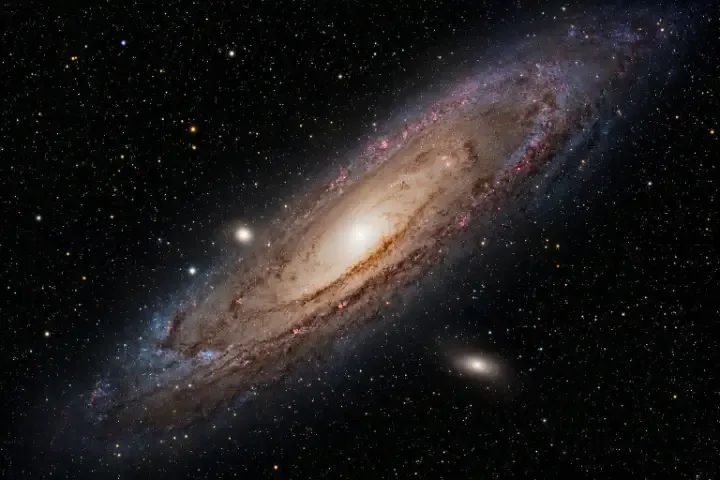
Andromeda Galaxy - M31

Andromeda Galaxy - M31

By Michael PageGalaxy

Telescope: Williams Optics UltraCat 108

Camera: ZWO ASI2600MM

Location: Starfront Observatory

Captured: 2026-08-14

The Andromeda Galaxy is a barred spiral galaxy[c] and is the nearest major galaxy to the Milky Way. It was originally named the Andromeda Nebula and is cataloged as Messier 31, M31, and NGC 224. Andromeda has a D25 isophotal diameter of about 46.56 kiloparsecs (152,000 light-years)[9] and is approximately 765 kpc (2.5 million light-years) from Earth.

Butterfly Nebula - NGC6302

Butterfly Nebula - NGC6302

By Michael PageNebula

Telescope: Williams Optics UltraCat 108

Camera: ZWO ASI2600MM

Location: Starfront Observatory, Rockwood,Texas

Captured: 2026-08-11

NGC 6302 (also known as the Bug Nebula, Butterfly Nebula, or Caldwell 69) is a bipolar type planetary nebula in the constellation Scorpius. The structure in this planetary nebula is among the most complex ever seen in any planetary nebulae. The spectrum of Butterfly Nebula shows that its central star is one of the hottest stars known, with a surface temperature in excess of 250,000 degrees Celsius. This implies that the star from which it formed must have been very large in order to become this hot.

Crescent Nebula - NGC6888

Crescent Nebula - NGC6888

By Michael PageNebula

Telescope: Williams Optics UltraCat 108

Camera: ZWO ASI2600MM

Location: Starfront Observatory, Rockwood,Texas

Captured: 2026-07-29

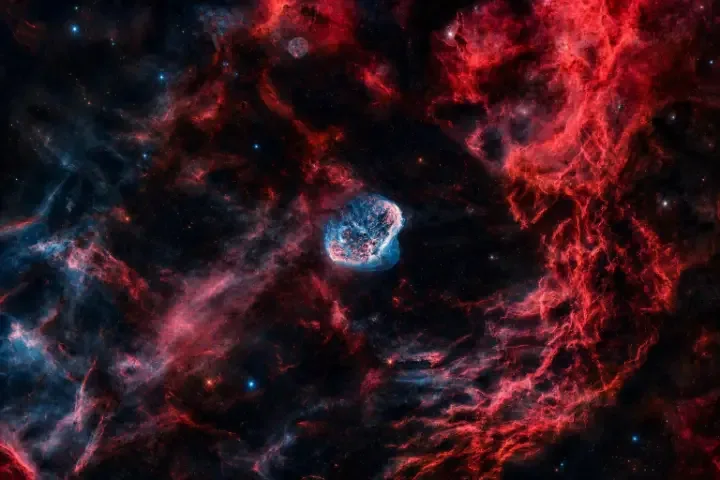
The Crescent Nebula (also known as NGC 6888, Caldwell 27, Sharpless 105) is an emission nebula in the constellation Cygnus, about 5000 light-years away from Earth. It was discovered by William Herschel in 1792.[2] It is formed by the fast stellar wind from the Wolf-Rayet star WR 136 (HD 192163) colliding with and energizing the slower moving wind ejected by the star when it became a red giant around 250,000 years ago[3]. The result of the collision is a shell and two shock waves, one moving outward and one moving inward. The inward moving shock wave heats the stellar wind to X-ray-emitting temperatures.

North American Nebula - NGC7000

North American Nebula - NGC7000

By Michael PageNebula

Telescope: Williams Optics UltraCat 108

Camera: ZWO ASI2600MM

Location: Starfront Observatory, Rockwood,Texas

Captured: 2026-07-29

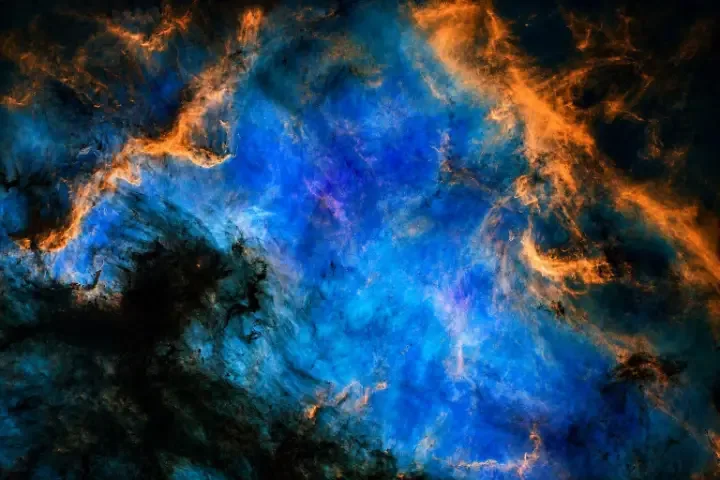
The North America Nebula (NGC 7000 or Caldwell 20) is an emission nebula in the constellation Cygnus, close to Deneb (the tail of the swan and its brightest star) in the night sky. It is named because its shape resembles North America.

Pelican Nebula - IC5070

Pelican Nebula - IC5070

By Michael PageNebula

Telescope: Williams Optics UltraCat 108

Camera: ZWO ASI2600MM

Location: Starfront Observatory, Rockwood,Texas

Captured: 2026-07-27

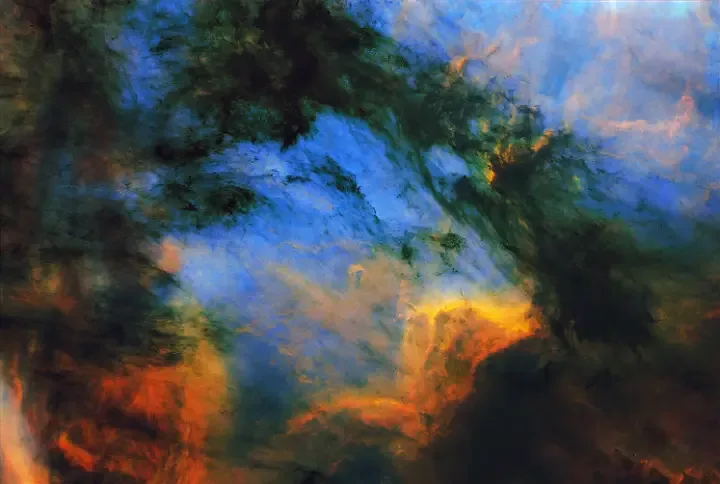
The Pelican Nebula (also known as IC 5070[1]) is an H II region associated with the North America Nebula in the constellation of Cygnus. The gaseous contortions of this emission nebula bear a resemblance to a pelican, giving rise to its name.[1] The Pelican Nebula is located nearby first magnitude star Deneb, and is divided from its more prominent neighbour, the North America Nebula, by a foreground molecular cloud filled with dark dust.[2] Both are part of the larger H II region of Westerhout 80.[2]

Lagoon Nebula - M8

Lagoon Nebula - M8

By Michael PageNebula

Telescope: Williams Optics UltraCat 108

Camera: ZWO ASI2600MM

Location: Starfront Observatory, Rockwood,Texas

Captured: 2026-07-22

The Lagoon Nebula (catalogued as Messier 8 or M8, NGC 6523, Sharpless 25, RCW 146, and Gum 72) is a giant emission nebula with an H II region located in the constellation Sagittarius. Discovered by Giovanni Hodierna in 1654, it is one of only two star-forming nebulae faintly visible to the naked eye from mid-northern latitudes[5][6] (the other being the Orion Nebula).

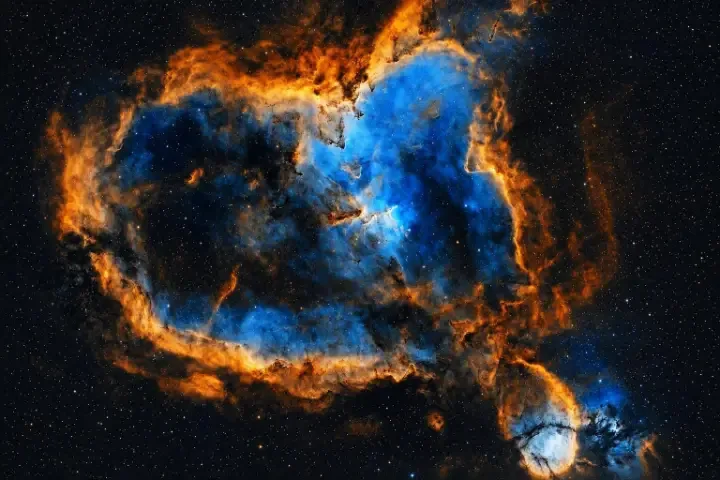
Heart Nebula

Heart Nebula

By Michael PageNebula

Telescope: Williams Optics UltraCat 108

Camera: ZWO ASI2600MM

Location: Los Gatos, California

Captured: 2026-05-24

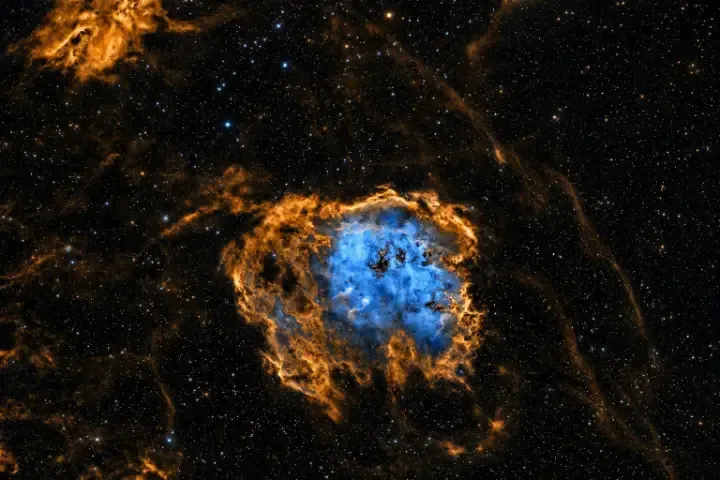
Tadpoles Nebula - IC410

Tadpoles Nebula - IC410

By Michael PageNebula

Telescope: Williams Optics UltraCat 108

Camera: ZWO ASI2600MM

Location: Los Gatos, California

Captured: 2026-05-04

IC 410, often called the Tadpoles Nebula, is an emission nebula in the constellation Auriga surrounding the young open cluster NGC 1893. The two distinctive “tadpole” structures are dense clouds of gas and dust shaped by radiation and stellar winds from the cluster’s young stars, and they are thought to be sites of ongoing star formation. The tadpole structures are roughly 10 light-years long.

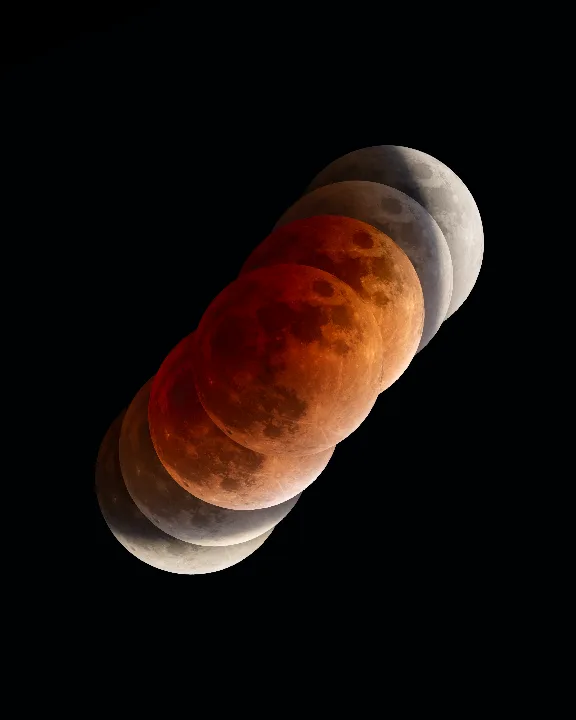
The Earth’s Shadow Revealed

The Earth’s Shadow Revealed

By Naveen RavindarPlanetary

Telescope: Celestron EdgeHD 8

Camera: Canon 80D

Location: Orange County, CA

Captured: 2026-03-03

A composite image from the total lunar eclipse early in 2026, revealing the outline of the Earth’s Umbral shadow at the moon.

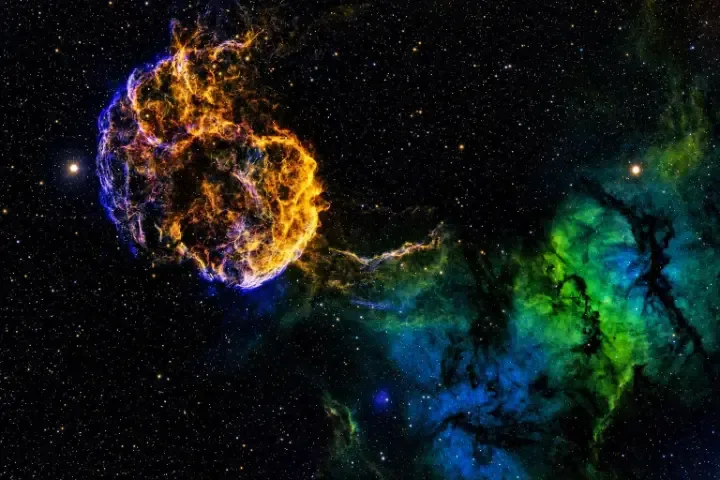
JellyFish Nebula - IC443

JellyFish Nebula - IC443

By Michael PageNebula

Telescope: Williams Optics UltraCat 108

Camera: ZWO ASI2600MM

Location: Los Gatos, California, USA.

Captured: 2026-02-05

IC 443 (also known as the Jellyfish Nebula and Sharpless 248 (Sh2-248)) is a galactic supernova remnant (SNR) in the constellation Gemini. On the plane of the sky, it is located near the star Eta Geminorum. Its distance is roughly 5,000 light years from Earth. IC 443 may be the remains of a supernova that occurred 30,000 - 35,000 years ago. The same supernova event likely created the neutron star CXOU J061705.3+222127, the collapsed remnant of the stellar core. IC 443 is one of the best-studied cases of supernova remnants interacting with surrounding molecular clouds.

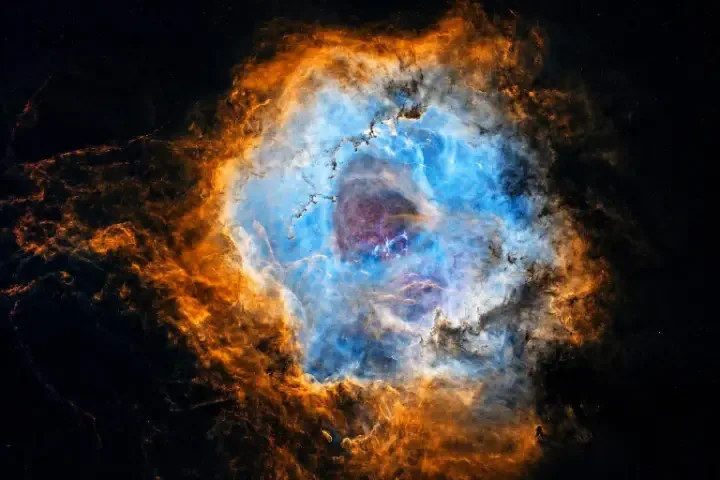
Rosette Nebula - NGC2237

Rosette Nebula - NGC2237

By Michael PageNebula

Telescope: Williams Optics UltraCat 108

Camera: ZWO ASI2600MM

Location: Los Gatos, California

Captured: 2026-01-20

The Rosette Nebula (also known as Caldwell 49) is an H II region located near one end of a giant molecular cloud in the Monoceros region of the Milky Way Galaxy. The open cluster NGC 2244 (Caldwell 50) is closely associated with the nebulosity, the stars of the cluster having been formed from the nebula's matter.